
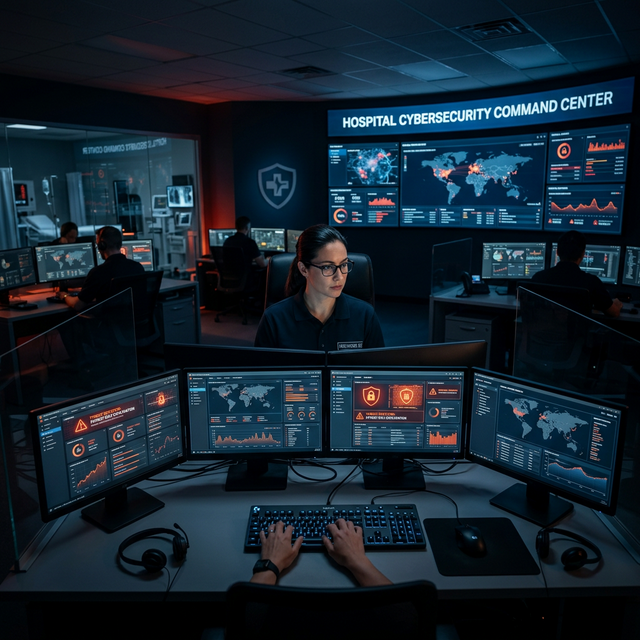
If you run a healthcare organization in the Treasure Valley, you are a target. Not hypothetically — actively and specifically. Healthcare has been the most-breached industry for the past 13 consecutive years according to IBM's Cost of a Data Breach report. The average healthcare breach now costs over $10.9 million — more than any other sector.
And the most common entry point isn't a sophisticated hack. It's an employee clicking a phishing email, using a weak password, or not knowing how to respond when they receive a suspicious request.
74% of all healthcare data breaches involve human error — not technical failures. Security training is your most cost-effective defense.
What HIPAA Training Actually Requires
The HIPAA Security Rule mandates that covered entities and business associates implement a security awareness and training program for all workforce members. But the regulation is intentionally non-prescriptive about what that means — which leads many organizations to treat it as a once-a-year checkbox.
That approach fails. HIPAA enforcement agencies increasingly evaluate not just whether you had training, but whether you had effective training — meaning staff who can actually identify and respond to threats, not just recall what PHI stands for.
"Annual training videos don't change behavior. What changes behavior is being caught clicking a simulated phishing link, seeing the consequences, and practicing doing better — repeatedly." — Healthcare IT security specialist
Five Critical Training Modules for Healthcare IT
1. Phishing Simulation & Recognition
Run quarterly simulated phishing campaigns. When staff click, redirect to an immediate micro-lesson — not punishment. Track click rates over time. The goal is behavioral change measured by declining susceptibility rates.
2. HIPAA Scenario Role-Plays
Move beyond definitions. Use scenario simulations where staff navigate real decisions: a family member asking for a patient's information, a colleague leaving an EHR screen unlocked, a vendor requesting access they shouldn't have.
3. Ransomware & Incident Response
Staff should know exactly what to do when something goes wrong — who to call, what not to do (don't restart, don't pay, don't panic without calling IT). Practice incident response scenarios at least annually.
4. Password and MFA Hygiene
Credential stuffing is rampant in healthcare. Train staff on password manager use, MFA setup for all clinical systems, and the dangers of password reuse. Make it practical and hands-on, not a lecture.
5. Social Engineering & Vishing
Phone-based attacks ("Hi, I'm from IT, I need your login to fix your account") are increasingly common. Role-plays where staff practice politely refusing and escalating suspicious calls are extremely effective.
Making It Local and Relevant
Generic security training fails partly because it feels distant. When you frame scenarios around the specific systems your team uses — your EHR, your scheduling platform, your communication tools — engagement and retention increase dramatically.
Organizations like Cornerstone Whole Healthcare Organization (C-WHO) and Health Neighborhood Center operate with lean IT teams and need security training that's efficient, targeted, and doesn't require an enterprise security budget. That's exactly the gap AgentLMS was designed to fill — AI-powered simulation built from your own policies and documentation.
The Compliance Minimum vs. The Actual Standard
Here's the uncomfortable truth: the HIPAA minimum is not the same as actually being secure. A once-a-year training check-off satisfies the paperwork. It does not protect your patients, your organization, or the community members who trust you with their most sensitive health information.
The organizations that avoid devastating breaches are the ones that treat security as a continuous, practiced behavior — not an annual event.
Build security training your team will actually retain.
AgentLMS generates HIPAA scenario simulations, phishing response drills, and incident response role-plays directly from your security policies — no vendor lock-in required.
Schedule a Demo